
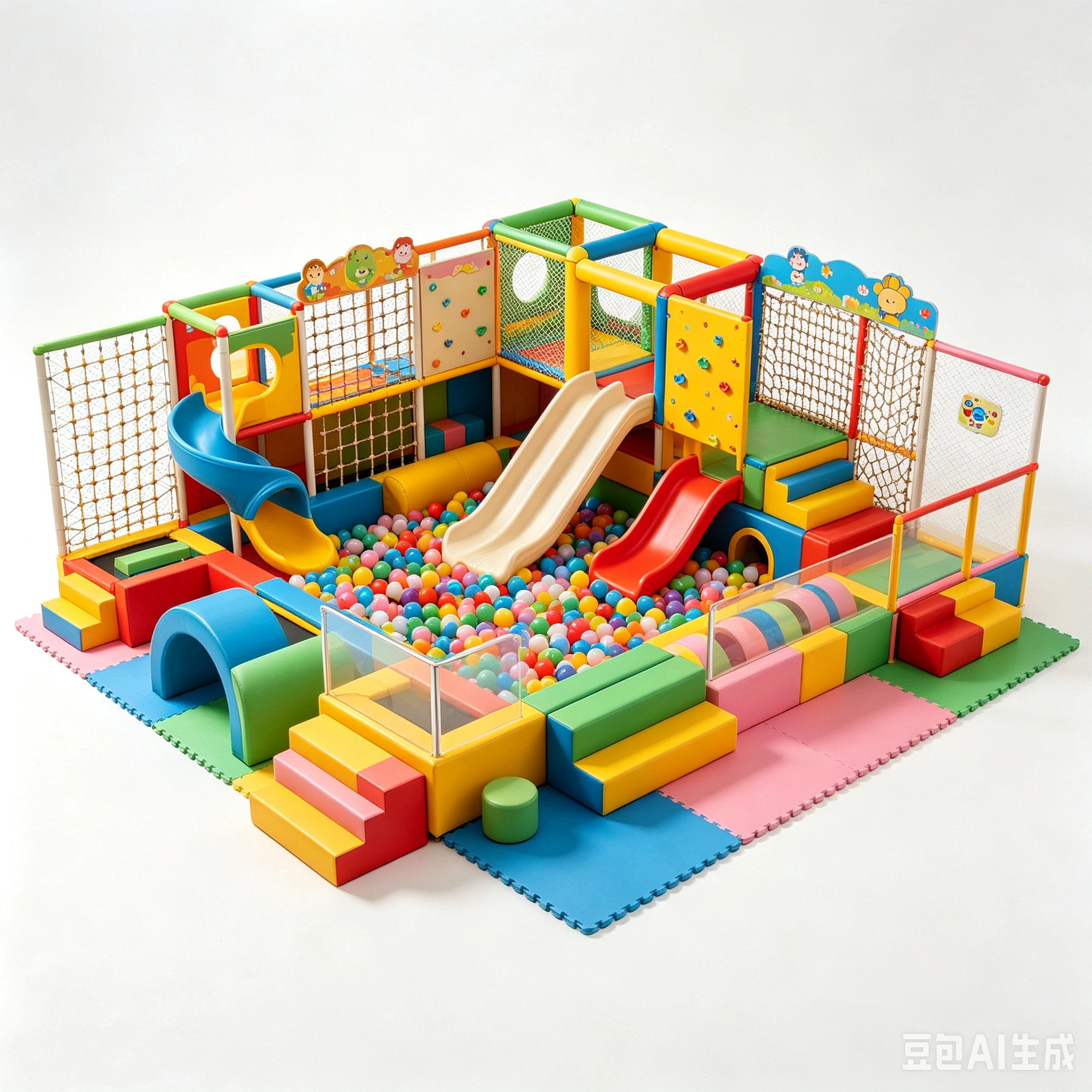
Operational performance is shaped long before the venue opens. A few well-resolved design details can shorten daily routines, improve supervision and make maintenance less disruptive throughout the playground's working life.
1. Provide direct cleaning access
Cleaning becomes faster and more reliable when staff can reach every platform, tunnel and enclosed feature without dismantling the attraction. Service gates, removable panels and sensible access points should be planned alongside the play route. Equipment spacing also needs to accommodate the tools used in the venue's daily and deep-clean routines.
Pay particular attention to ball pits, netted corners, slide exits and areas beneath decks. If access is difficult, small maintenance tasks are delayed and eventually become larger operational problems.
2. Design for natural supervision
Good sightlines reduce the number of blind spots staff must patrol and make parent supervision more comfortable. Position high-traffic activities where they can be seen from the main floor, and use transparent netting or open guard details where safety requirements allow. Staff stations should overlook entrances, exits and the most active transition points.
Natural supervision does not replace trained attendants, but it allows the team to notice emerging issues earlier and respond more efficiently.
3. Create clear maintenance zones
Electrical controls, mechanical components and storage for spare parts should be accessible to authorized staff without interrupting the guest experience. Keep service routes separate from play circulation whenever possible, and provide enough working clearance around equipment that requires regular inspection.
A documented inspection path is equally useful. When checks follow the same logical sequence every day, omissions are less likely and shift handovers become easier to manage.
4. Specify materials for real use conditions
Material selection should reflect climate, cleaning chemicals, expected footfall and the type of play. High-contact padding needs durable covers and secure seams. Floor finishes should balance impact performance, slip resistance and cleanability. Outdoor components require appropriate corrosion and ultraviolet resistance for the installation environment.
Ask how each finish will look after repeated cleaning, not only on opening day. A coordinated palette with replaceable high-wear surfaces usually ages better than a scheme that relies on delicate decorative finishes.
5. Make high-wear components replaceable
Wear is inevitable at entrances, climbing grips, punching features, net connections and slide landing areas. Modular padding, standardized fixings and clearly identified replacement parts allow operators to repair a localized issue without closing a complete attraction.
Before handover, obtain a parts list, maintenance schedule and clear route for ordering replacements. These simple documents protect uptime and help the operations team budget for the venue's full life cycle.